
How to Converse With a Cow
posted on
June 20, 2022
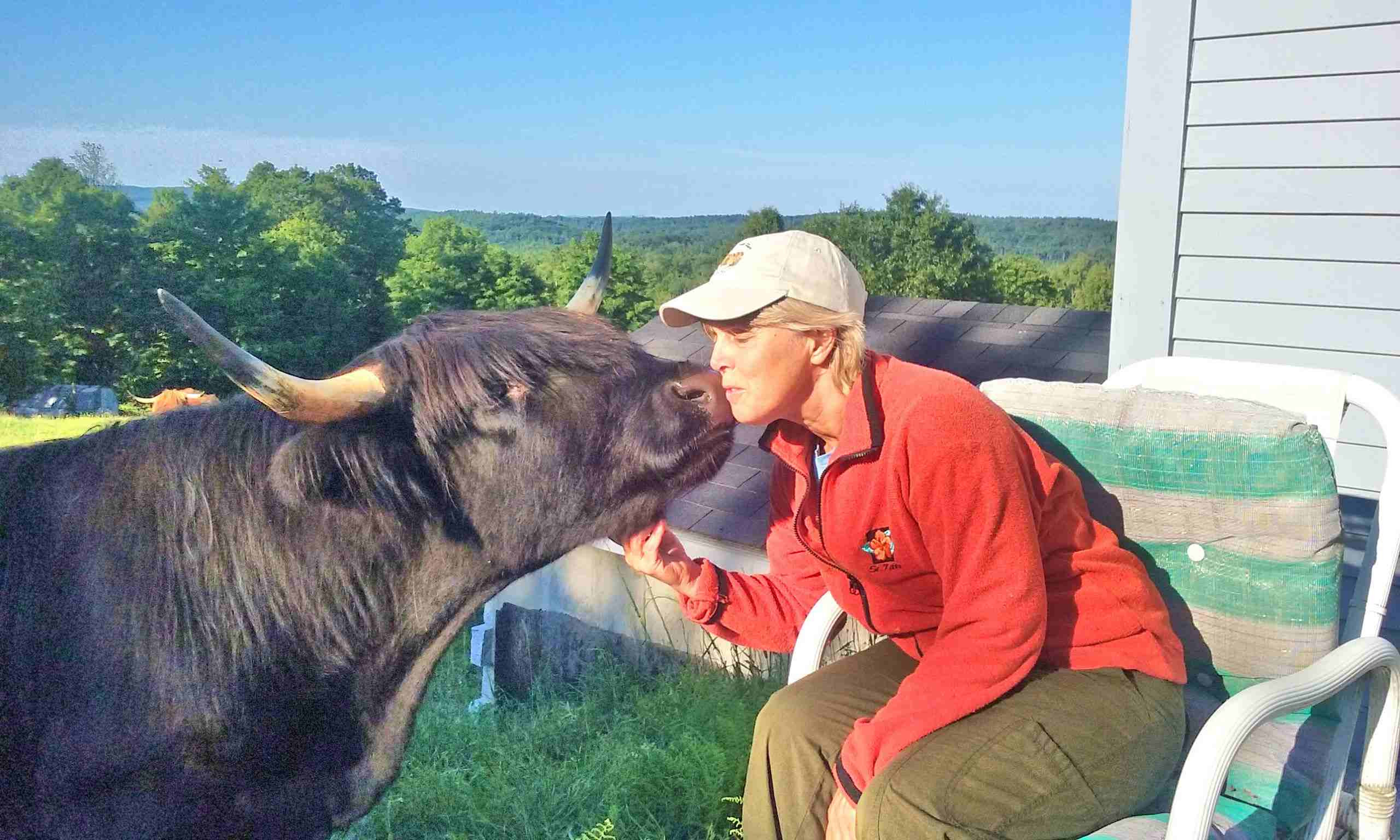
If your child wants to join me on the farm, we still have a few openings in the Learning Networks Foundation Summer Day camp. This year we offer two separate sessions: July 11-15 and July 18-22. Details are here. Imagine the joy in your child's eyes as your daughter rides a steer, or your son hugs a cow.
Every tot knows that cows go "moo," but there's a little more to it than that. The soft chortle-moo of mother to baby is distinct from the growl-moo of one bull challenging another, which differs from the impatient moos of hungry cattle. Continuous mooing at 2 in the morning usually means a mother is calling to a missing calf.
But a cow's first resort is usually non-vocal communication. The best way to understand a cow is to learn body language. Is her head lowered, did she swing her horns at you, or did she kick? Here are some conversational behaviors you might find helpful when talking to cows.
Cow Speak
- "Hello." When two cows meet, they stretch their necks and sniff each other. So if you want to introduce yourself, hold a hand just a few inches from the cow's nose. Cows are curious and will usually step forward to sniff the hand. Let the cow come to you; don't break the spell by reaching to touch her nose. Would you like a stranger suddenly stroking your nose? I Didn't think so.
- "Get lost!" Some cows want to socialize. Some don't. Leave her alone if you've said, "hello," and the cow swings her head at you as if she is brushing you off. She doesn't want to talk, so move on to another cow.
- "Ahhhh!" Once you know she's receptive, try a back rub. Cows love that. Even the meanest cow will dip her head to the ground and stand still if you rub her back. She especially enjoys being scratched where her horns can't reach, like the top of her tail or the middle of her back. Cow's hides are thick, and a vigorous scratching will win her heart.
- "More scratching!" Cows love to have their chests and necks massaged, too. Topper, one of my oxen, will search me out for neck rubs. He could stand for hours, resting his head on my shoulder while I rub his chest. (He has more time than I do.)
- "Hey!" All cows will kick if startled. Don't sneak up on a cow. Let her know you are approaching and move to her side so she can see you.
That is basic Mooolish – not enough to order a meal or book a hotel room – but enough to get acquainted with my bovine friends.
Summer Camp 2022
If your child wants to join me on the farm, we still have a few openings in the Learning Networks Foundation Summer Day camp. This year we offer two separate sessions: July 11-15 and July 18-22. Details are here Imagine the joy in your child's eyes as your daughter rides a steer, or your son hugs a cow.


